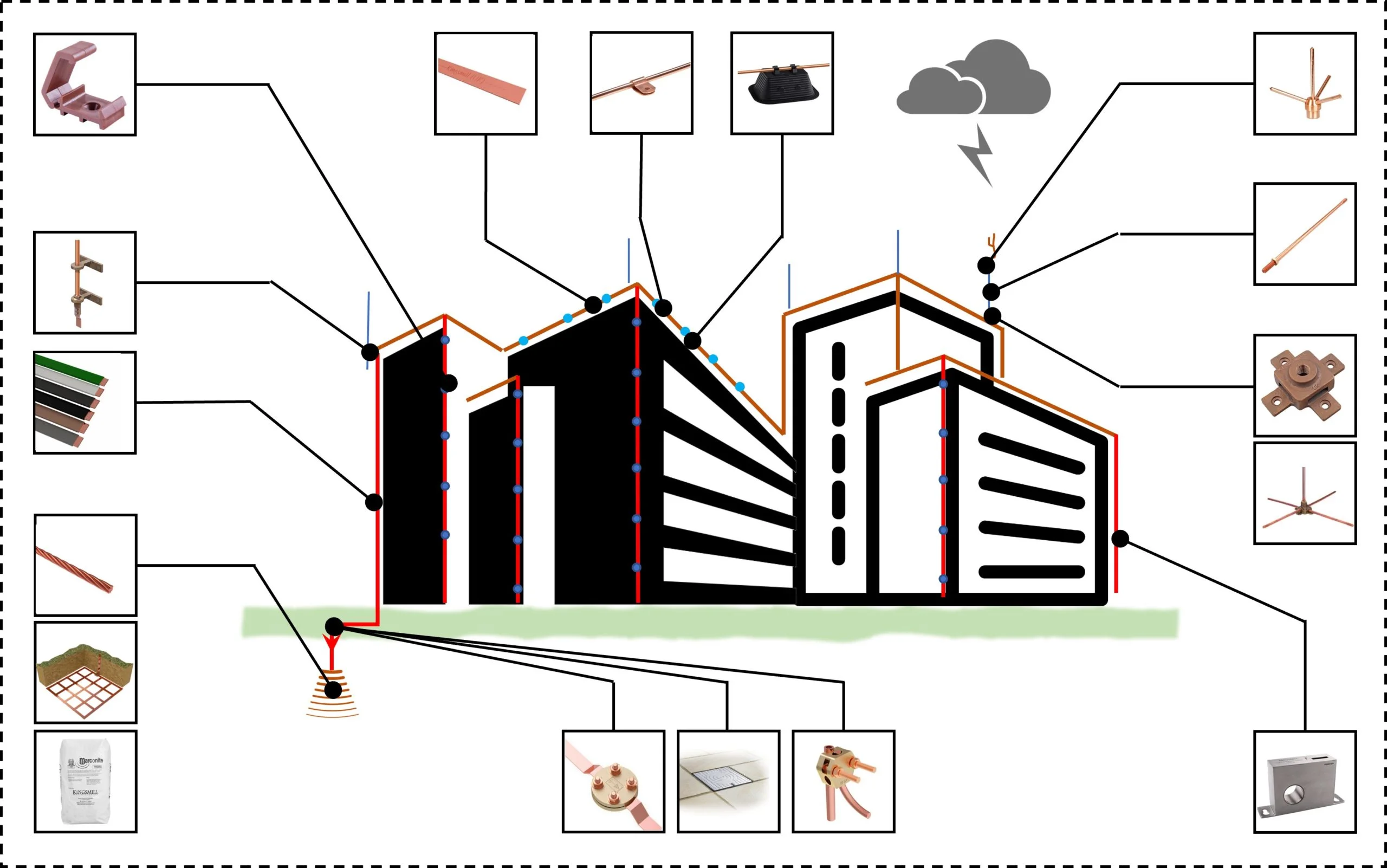
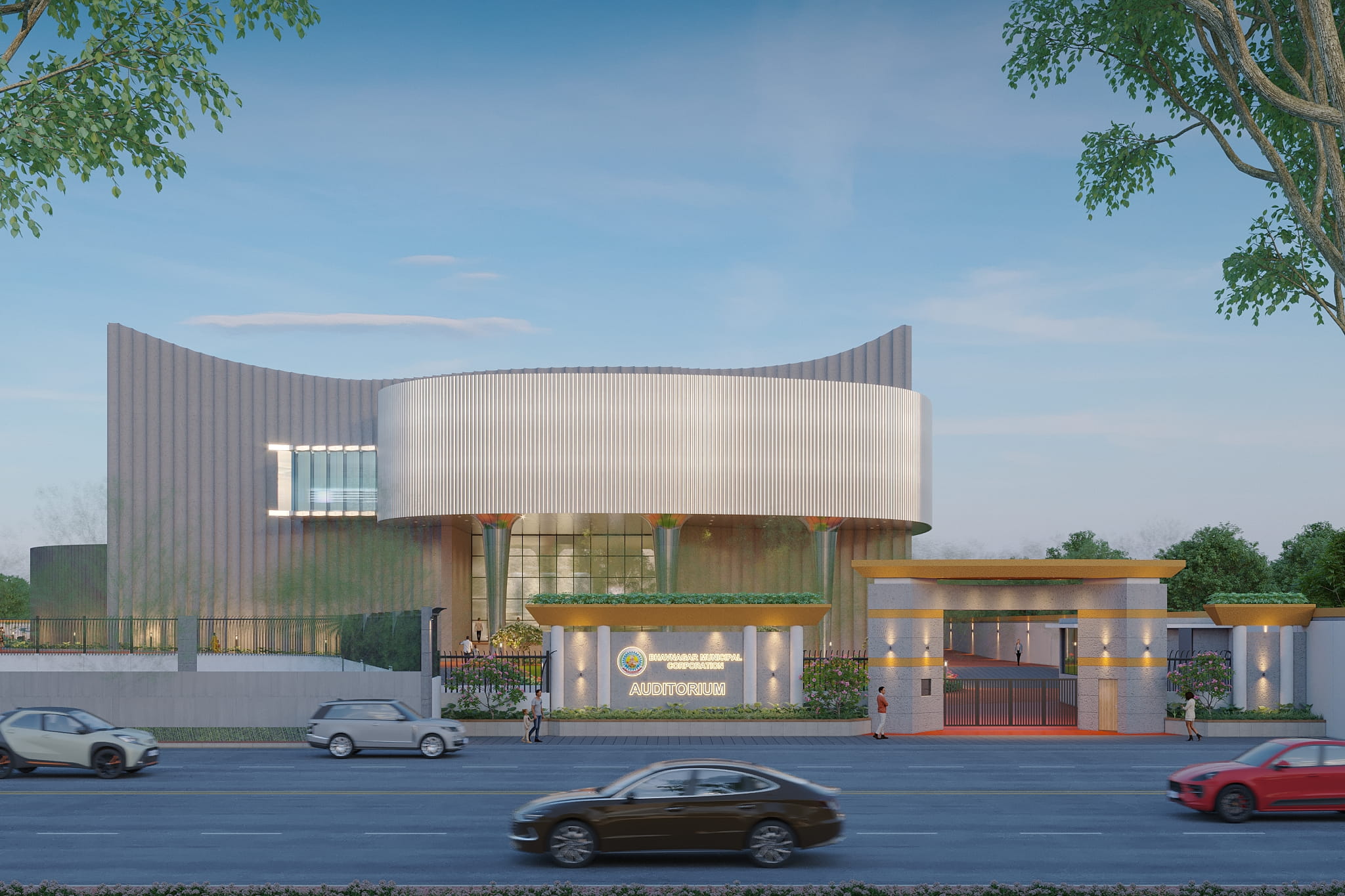
A Lightning Protection System (LPS) is designed to protect buildings and structures from damage caused by lightning strikes by safely dissipating the electrical energy into the ground. A typical LPS consists of several components that work together to achieve this objective. Here are the key components of a Lightning Protection System:
Air Terminals (Lightning Rods or Strike Terminals):
Air terminals are metal rods or points installed at the highest points of a structure to intercept lightning strikes. They are designed to provide a preferred path for lightning to strike, preventing it from directly hitting the structure.
Conductors (Down Conductors):
Conductors are heavy-duty metal cables or strips that connect the air terminals to the grounding system. They carry the lightning current safely down to the ground.
Grounding Electrodes (Ground Rods):
Grounding electrodes are buried metal rods or plates that provide a low-resistance path for the lightning current to dissipate safely into the earth. They are connected to the down conductors.
Grounding Conductors:
Grounding conductors connect the grounding electrodes to the structural steel or rebar within the building's foundation to ensure a continuous and low-resistance path for lightning current to reach the ground.
Grounding Network:
The grounding network consists of interconnected conductive elements, including grounding electrodes, grounding conductors, and structural components, to create an effective path for lightning current to disperse into the ground.
Surge Protection Devices (SPDs):
Surge protection devices are installed at electrical service entrance points and on sensitive electronic equipment to divert lightning-induced surges away from the electrical system, preventing damage to appliances and electronic devices.
Bonding and Equipotential Bonding:
Bonding ensures that all metal components of the structure are electrically connected, minimizing potential differences that can result in side flashes or damage to the structure.
Grounding Plates and Grounding Wells (Optional):
In areas with high soil resistance, additional grounding plates or grounding wells filled with conductive material may be used to enhance the grounding system's performance.
Lightning Protection System Inspection Points:
Inspection points are installed at various locations to allow for regular inspections and maintenance of the LPS, including visual checks and resistance measurements.
Surge Counter (Optional):
A surge counter is a device that records the number of lightning strikes and surges the LPS has absorbed. It helps in assessing the system's performance and maintenance needs.
Warning Signs and Labels:
Warning signs and labels are placed on or near the air terminals and other LPS components to alert individuals to the presence of lightning protection and to promote safety.
Detailed Design and Installation Plan:
A comprehensive design and installation plan specifies the locations of all components, including air terminals, conductors, and grounding elements, ensuring that the system is effective.
Lightning Protection Systems are essential for safeguarding structures, people, and sensitive equipment from the destructive effects of lightning strikes. Proper design, installation, and maintenance are crucial to ensure the system's reliability and effectiveness. The specific components and configurations of an LPS may vary depending on the size and complexity of the structure and local regulations.
Please contact us for all of your MEP service needs at Email: essconsmep@gmail.com or call us on +91 97129 46469
Visit us at www.essconsmep.com